Why Your Business Needs a Multilingual Website
A multilingual website is essential for any business in Brussels and beyond. At De Dycker Development, we build multilingual websites and web applications using modern technologies like Next.js, Strapi, and Payload CMS. By speaking your customers’ language, whether in English, French, or Dutch, you gain trust, improve SEO rankings, and expand your reach in Belgium’s diverse market.
In today’s globalized world, a multilingual website is no longer a luxury, it’s a necessity. At De Dycker Development, based in Etterbeek, Brussels, we help businesses reach wider audiences by building websites and web applications that speak directly to their customers’ languages.
The Multilingual Reality of Brussels
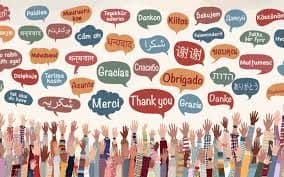
Brussels isn’t just the capital of Belgium, it’s one of the most multicultural cities in Europe. Home to the European Union, international organizations, and a thriving expat community, Brussels brings together people from all over the world. Walk through Etterbeek, Ixelles, or the city center, and you’ll hear a mix of French, Dutch, English, German, Spanish, Arabic, Portuguese, and many more languages in everyday life.
For businesses, this linguistic diversity is both a challenge and an opportunity. Speaking to customers in their preferred language builds trust, accessibility, and connection. In Brussels, offering your website in at least French, Dutch, and English is almost a necessity if you want to reach both locals and the international community.
At De Dycker Development, we understand this reality first-hand. That’s why we translated our own site into English, French, and Dutch, and why we recommend every Brussels-based business to do the same if they want to stand out in this uniquely multilingual environment.
The SEO Advantage of a Multilingual Website
Having a multilingual website helps your business get found online. Here's why it matters, especially in a city like Brussels:
- Show up in more searches
People search in different languages. Someone might type a query in French, another in Dutch, and an expat might use English. If your site is available in those languages, it can appear in all of those searches. - Reach the right people in the right place
A customer in Brussels searching in French is more likely to find your French pages. Someone in Antwerp looking in Dutch will see your Dutch pages. This makes your site much easier to find for the people you want to reach. - Use more keywords people are really typing
Every language has its own way of asking questions. By having your site in French, Dutch, and English, you cover more of the words and phrases people actually use, giving you an edge over competitors. - Less competition in certain languages
It’s harder to rank high in English because everyone competes there. But in French or Dutch—especially here in Belgium—there’s often less competition, which means your business has a better chance to stand out. - Build trust and keep visitors longer
People are more likely to stay and explore your site when it speaks their language. This means they’ll spend more time learning about your services, which leads to more calls, emails, and new clients.
Building Multilingual Sites the Right Way
A multilingual website is not just about translating text, it’s about building a smooth, professional experience for every visitor, no matter their language. Doing this well requires both the right tools and solid technical knowledge.
Some key aspects include:
- Correct URL structure
Multilingual sites need a clean setup, likeyourdomain.com/fr/oryourdomain.com/nl/, so that visitors (and search engines) clearly see which language version they are on. - Hreflang tags and SEO best practices
Behind the scenes, a multilingual site must tell Google which page belongs to which language. This avoids duplicate content problems and ensures the right version shows up for the right user. - Content management across languages
It’s not enough to just translate once. You need a CMS that makes it easy to keep all versions of your content aligned when updates happen. - Performance and security
Each language version should load just as fast and be just as secure as the original. Poorly configured multilingual sites often become slow or messy to manage.
Why De Dycker Development?
Choosing to invest in a multilingual website is a strategic decision and you need a partner who not only understands the tools, but also the challenges behind doing it right.
At De Dycker Development, we bring together:
- Local insight
Based in Etterbeek, Brussels, we know first-hand how multilingual the city is. We design websites that match this reality, so your business can connect with locals, expats, and international visitors alike. - Technical expertise
From setting up proper URL structures to configuring SEO-friendly hreflang tags and managing synchronized multilingual content, we take care of the complex technical details that make the difference between a site that “just works” and one that works well. - Experience with modern frameworks
Whether it’s Next.js for a lightning-fast frontend, Payload CMS or Strapi for efficient content management, or Java & Spring Boot for enterprise-grade backends, we pick the right technology for your project’s needs. - Future-proof solutions
Multilingual websites need to evolve. We don’t just build; we ensure your site remains easy to update, scalable as you grow, and ready for SEO improvements over time. - A multilingual team
We speak Dutch, French, and English—just like your customers. This helps us understand not only the technical side of multilingual websites, but also the cultural and communication nuances that make them effective.
Contact De Dycker Development today and let’s build a multilingual website that truly speaks your customers’ language.